
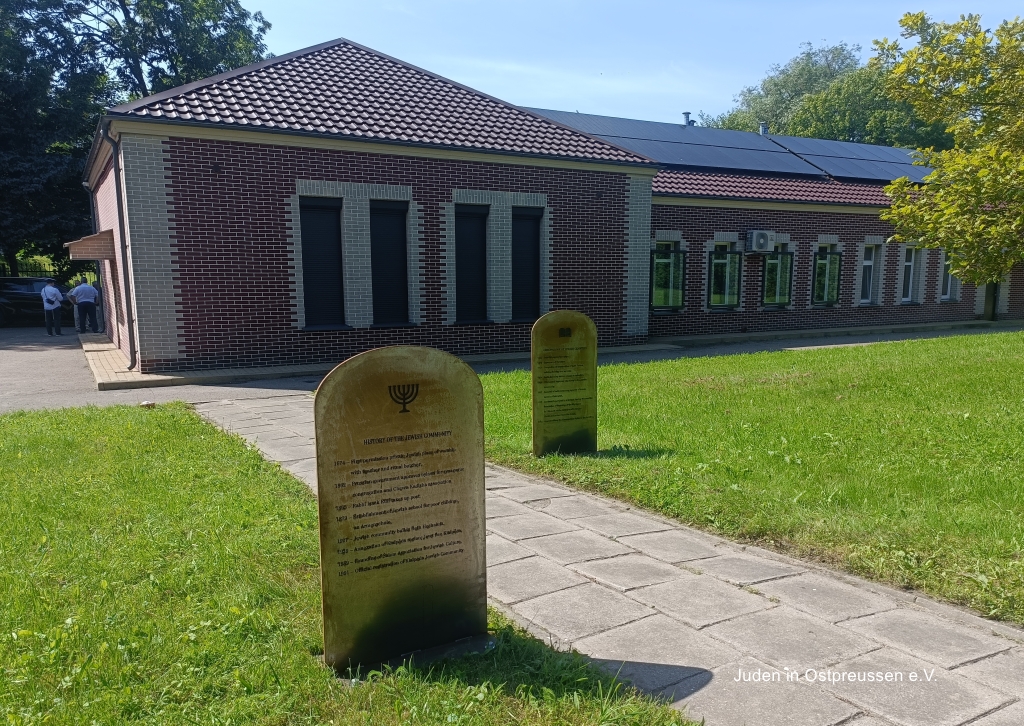
A relaunch
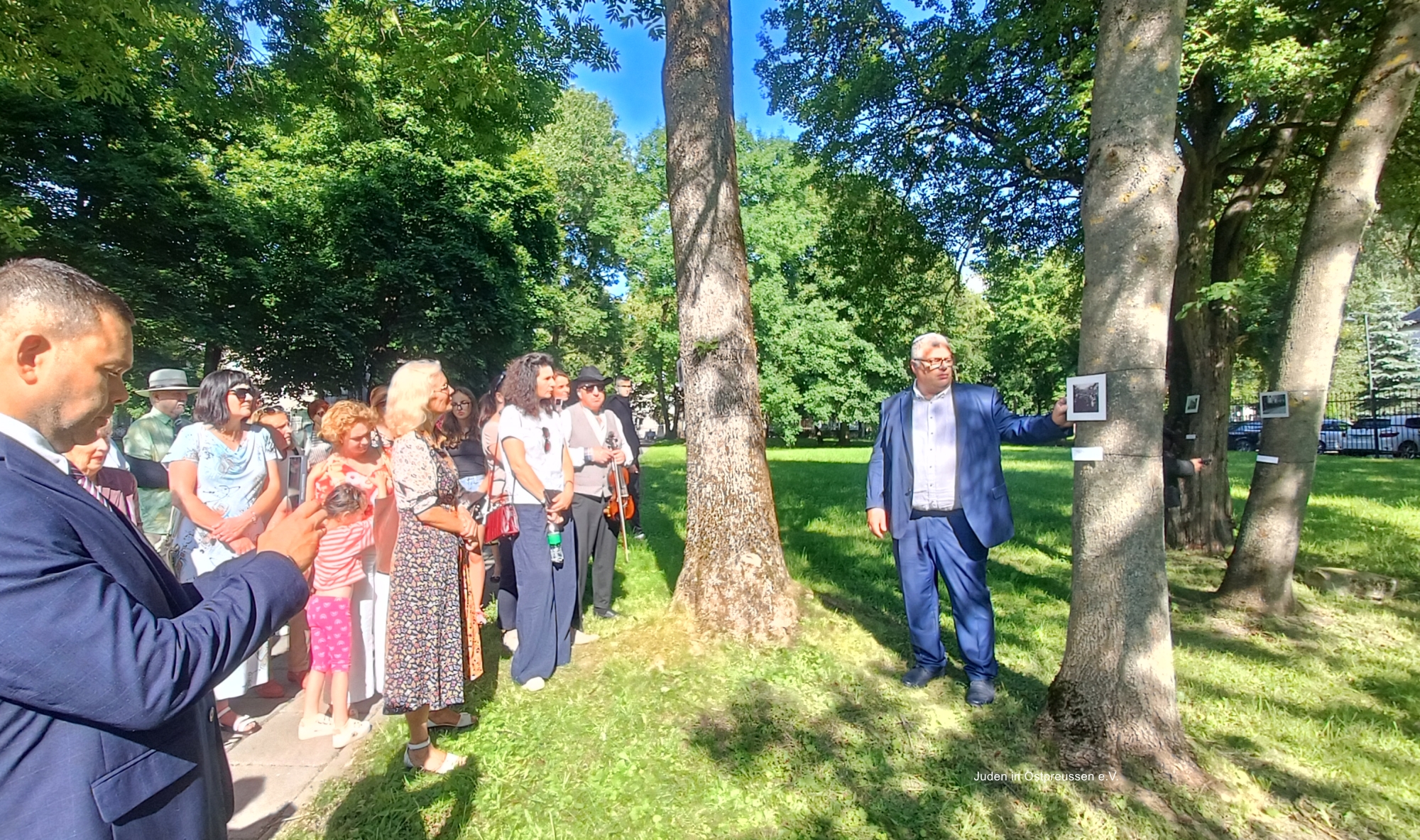
featuring a public exhibition and the installation of informational matzevot and new images at the Jewish Cemetery in Klaipėda. On July 30, 2026, the turbulent history of this site—extending right up to the recent past—was presented to the public, including representatives from politics, city administration, and academia, through images, a theatrical performance, sound installations, and a speech. In addition, 1,225 names of those buried here were compiled and are now available to interested descendants.

The exhibition “Voices That Have Faded Away” will be on view from August 3 to November 30, 2026, on the grounds of the Jewish Cemetery, next to the Lapidarium—which features gravestones and memorials, antenna foundations, and the Avenue of the Righteous—and now includes new informational panels detailing the historical chronology and numerous photographs depicting Jewish life and Jewish visitors in Memel.
Curator-led tours were hold on August 27 in German and on September 8 in Lithuanian.
Text of speech by Prof. Ruth Leiserowitz about the History of the Jewish Cemetery in five languages.
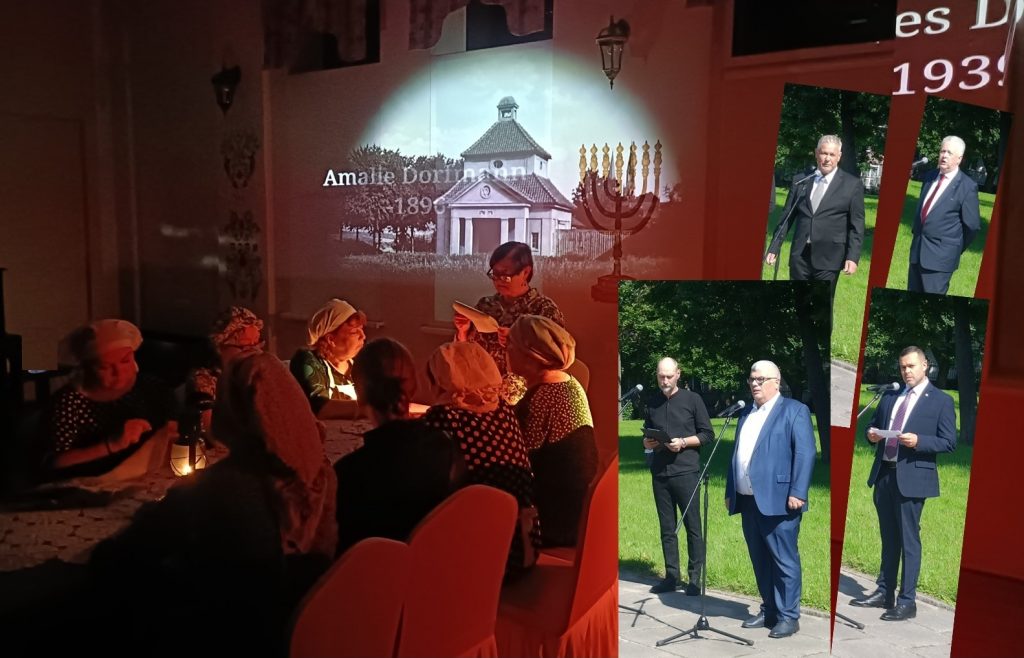
A cemetery is an important part of life in a city.
Today’s Jewish community in Klaipėda draws strength and hope for the future from this event, as it connects with tradition and the memory of previous generations. This is also important for the international connections that emanate from this port city.
This is also how we should understand the words of Feliksas Puzemskis, the initiator and Chairman of the Jewish Community, who links the future and hope with the memory of a vibrant past. This is especially true for this little piece of land where the current Jewish community gathers every day.
Following text based on the City of Klaipėda’s website, translated from Lithuanian
Residents who moved to Klaipėda in the postwar years and those born there still remember the forest of antennas that once stood in the city center. This was a secret radio jamming station that operated during the Soviet era, designed to block radio broadcasts from Western countries. The Soviet authorities sought to limit residents’ ability to listen to programs from “The Voice of America,” the BBC, “Radio Free Europe,” “Radio Liberty,” and Vatican Radio. The facility operated until the very end of 1988, when the jamming of foreign radio broadcasts was finally discontinued by order of the Minister of Communications of the Lithuanian SSR.
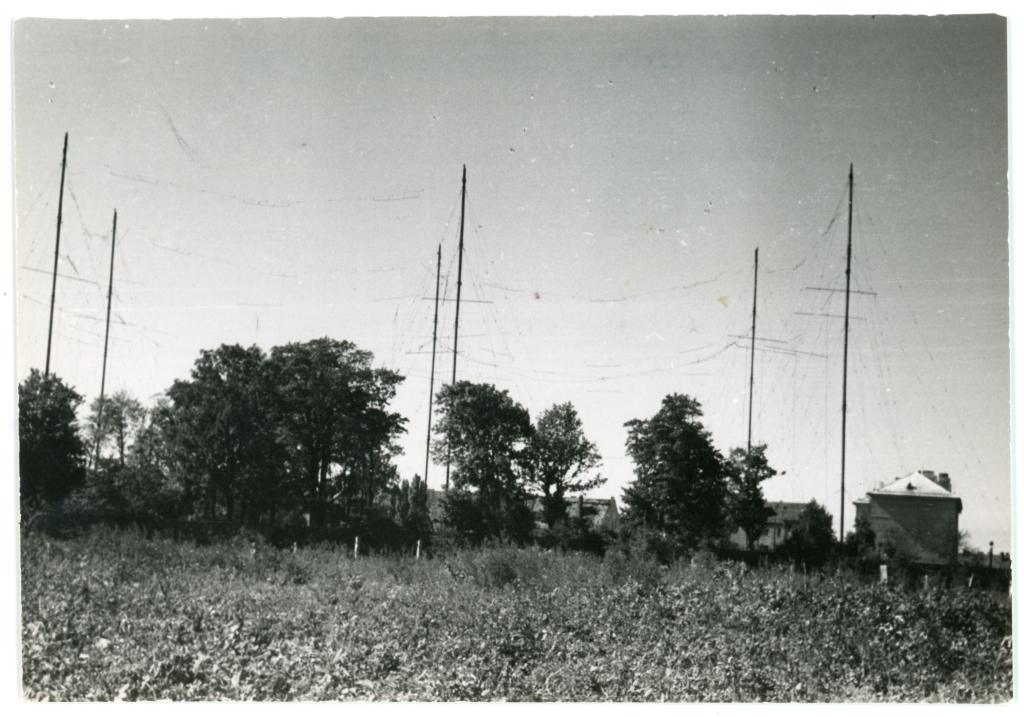
However, this area has a much longer and more complex history. Before World War II, this site housed the cemetery and ritual services center of the Klaipėda Jewish community. During the Nazi occupation, the Klaipėda Jewish community was destroyed, and its heritage suffered immense losses. After the war, the Soviet authorities established a secret radio jamming station, “Object No. 61,” on the site of the former cemetery. During the construction of this facility’s infrastructure, tombstones from the dismantled Jewish cemetery were used as building materials, including for the foundations of the antennas. The history of this area has become a telling testament to the legacy of two totalitarian regimes—the Nazi and the Soviet: one destroyed the city’s Jewish community, while the other erased its memory and consigned its past to oblivion for a long time.
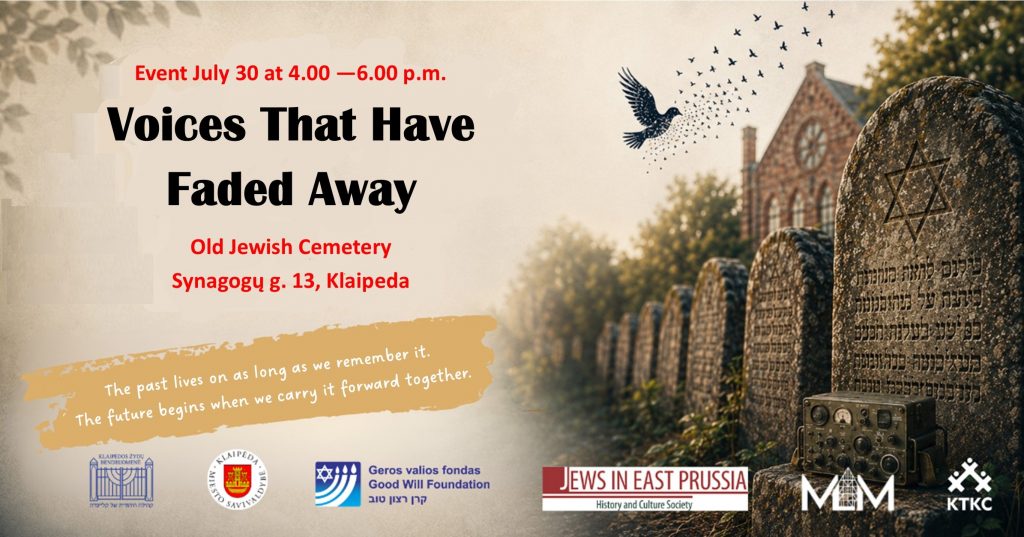
The past lives on as long as we remember it. The future begins when we carry it forward together.
Project initiator – Feliksas Puzemskis
Exhibition curator – prof. Ruth Leiserowitz
Design – curator Vladas Balsys
Event director – Nerijus Gedminas
Organized by Klaipėda Jewish Community
Project partners – the “Jews in East Prussia” Historical and Cultural Society, the Museum of Lithuania Minor, the Klaipėda Center for Ethnic Cultures, and the “Good Will Foundation.”
The project is funded by the Klaipėda City Municipality.